Boatanchor Legends · Tribute No. 45
Bill Carns, N7OTQ / KØCXX
KØCXX Trustee, Longtime Editor of the Signal, Keeper of the Wimberley Shack
If the founding trio of Bill Wheeler, Floyd Soo and Jay Roman gave the Collins Collectors Association its origins, Bill Carns gave it the institution that exists today. For more than three decades he has carried the organisation forward across every domain that matters: longtime editor of its magazine, former president of its board, trustee of the KØCXX club call, host of a Wimberley shack that runs broadcast-class Collins iron on 75 metres, and bench-partner to the late Bud Whitney through what came to thousands of restorations. Among all the figures of the post-founding era, Bill is the one who took the early effort and made it permanent.
Illinois, and the Long Path South
Bill earned his BSEE at the University of Illinois in 1964 and stayed on for a Master’s in plasma physics, completed in 1965. The plasma-physics path is an unusual one for a Collins-community figure — it points at the controlled-fusion, satellite-electric-propulsion, and defence-RF problems that the mid-1960s American engineering establishment was throwing money and people at — and it gave Bill an analytical reach far beyond ordinary HF amateur work. A long industry career followed; he is now retired.
For many years the Carns household was in Arizona — Chandler, Fountain Hills, Scottsdale, and Forest Lakes — before Bill sold the two Arizona homes in 2006 and undertook the long move to the Texas hill country. The path was anything but tidy. The Collins equipment travelled multiple times, including a rental stop while Bill searched for the right home and then built his own shack-shop at the new location outside Wimberley. By the time the Wimberley installation came together, Bud Whitney K7RMT — the CCA’s prolific restorer — was a short drive away. The two became a working pair.
30 December 1990
Bill first checked into the Collins User Net on the afternoon of 30 December 1990, on the same net during which Jay Roman KBØATQ also made his first appearance. Floyd Soo KF8AT was at the controls. Within twenty months Bill’s name was on the inside front cover of the August 1992 Collins Collector’s Magazine as one of the nine inaugural members of the CCA Board of Advisors. His CCA founding-member number, AC94-0009, places him within the first dozen formally enrolled members of the organisation. From that point onward Bill never stepped away.
The Signal
The transformation that defines Bill’s public contribution is the magazine. When he took over editorship of The Signal, it was a black-and-white newsletter with technical articles, heir to Jay Roman’s 1991 CCM. Bill turned it into something materially different — a stitch-bound, twenty-plus-page, full-colour quarterly with restoration articles, production-history surveys, equipment monographs, member-shack features, Dayton-banquet write-ups, banquet-speaker biographies, and obituaries for the figures of the Collins era as they have, one after another, become Silent Keys. The Q1 2017 issue, the 20V-3 broadcast-transmitter conversion series, the Bruene-coupler treatment, the HF-80 dedicated issue, the CCA Caribbean Cruise coverage — every quarter for more than a decade, this was Bill’s editorial output.
It was, by every account of those close to him, effectively a full-time job done as volunteer work.
Trustee of KØCXX
Art Collins, founder of the Collins Radio Company, held the callsign WØCXX, which today is licensed to the Collins Amateur Radio Club in Cedar Rapids, Iowa. KØCXX, a club call whose suffix echoes Art’s own, belongs to the Mogollon Rim Collins Collecting Club (MRCCC), of which Bill is trustee and president, and it is from KØCXX that he operates the Wimberley shack on AM and SSB. Putting Collins-built radios on the air under a call that honours Art Collins is something Bill has done routinely for more than a decade.
The Wimberley Bench
The KØCXX installation is not a typical ham shack. Bill has built up, and documented in The Signal across multiple article series, a Collins broadcast-class AM studio — complete with sequencer control circuits, antenna-switching latches that guarantee cold-switched RF, push-to-latch and push-to-unlatch foot-switch operation, and twin Collins 20V-class transmitters wired through a properly engineered patch matrix. The published articles — the “I AM Here” series for getting Collins broadcast transmitters back on the amateur bands, and the three-part 20V-3 conversion series referenced by builders on the CCA reflector through 2024 — have become the working playbook for restorers reviving Collins commercial-grade gear for amateur service.
Inside the KØCXX Collection
A look around the Wimberley shack and shop, from the broadcast transmitters to Bud Whitney’s bench. Select any photo to see it full size.
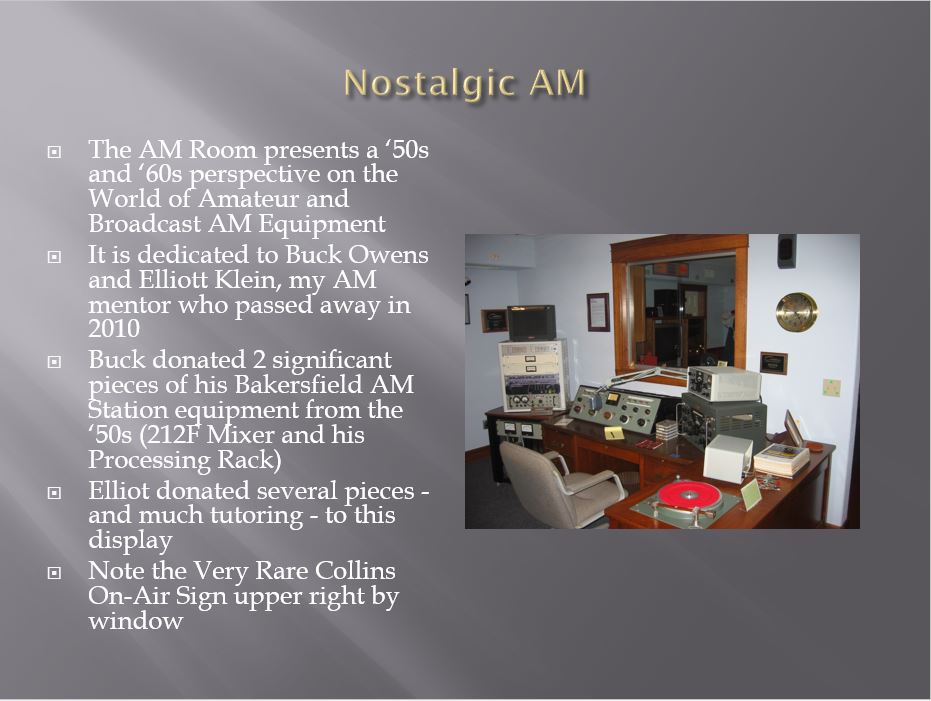
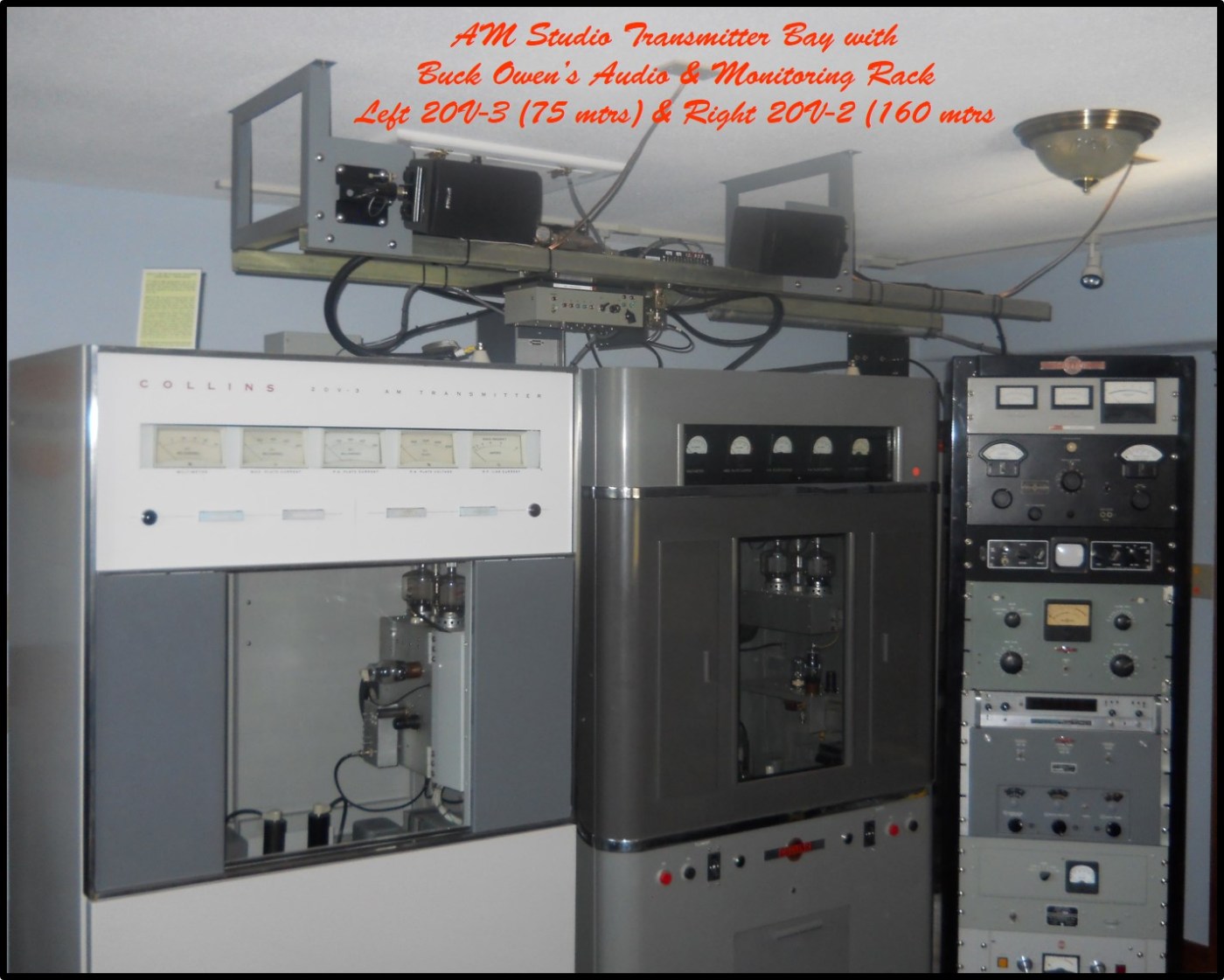
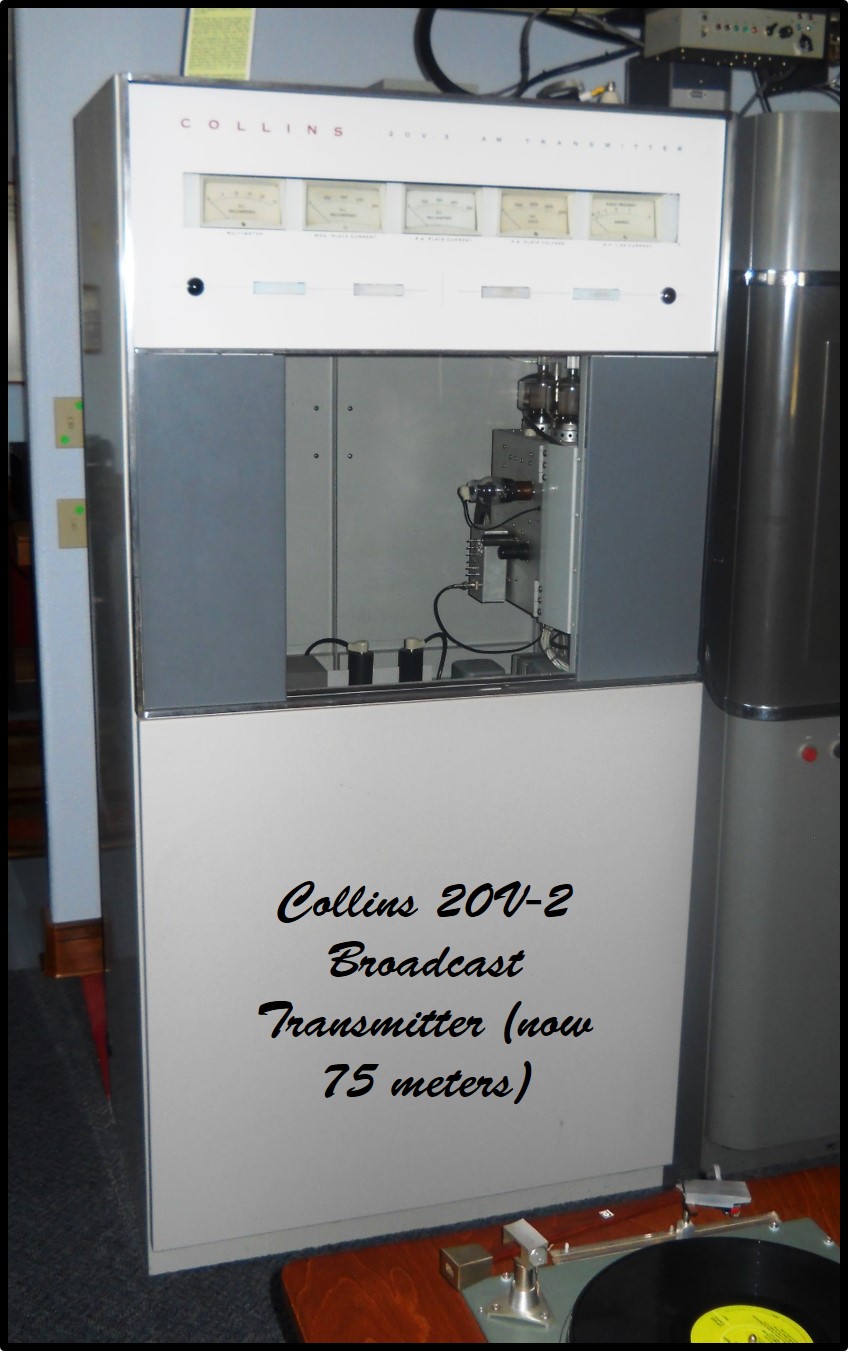
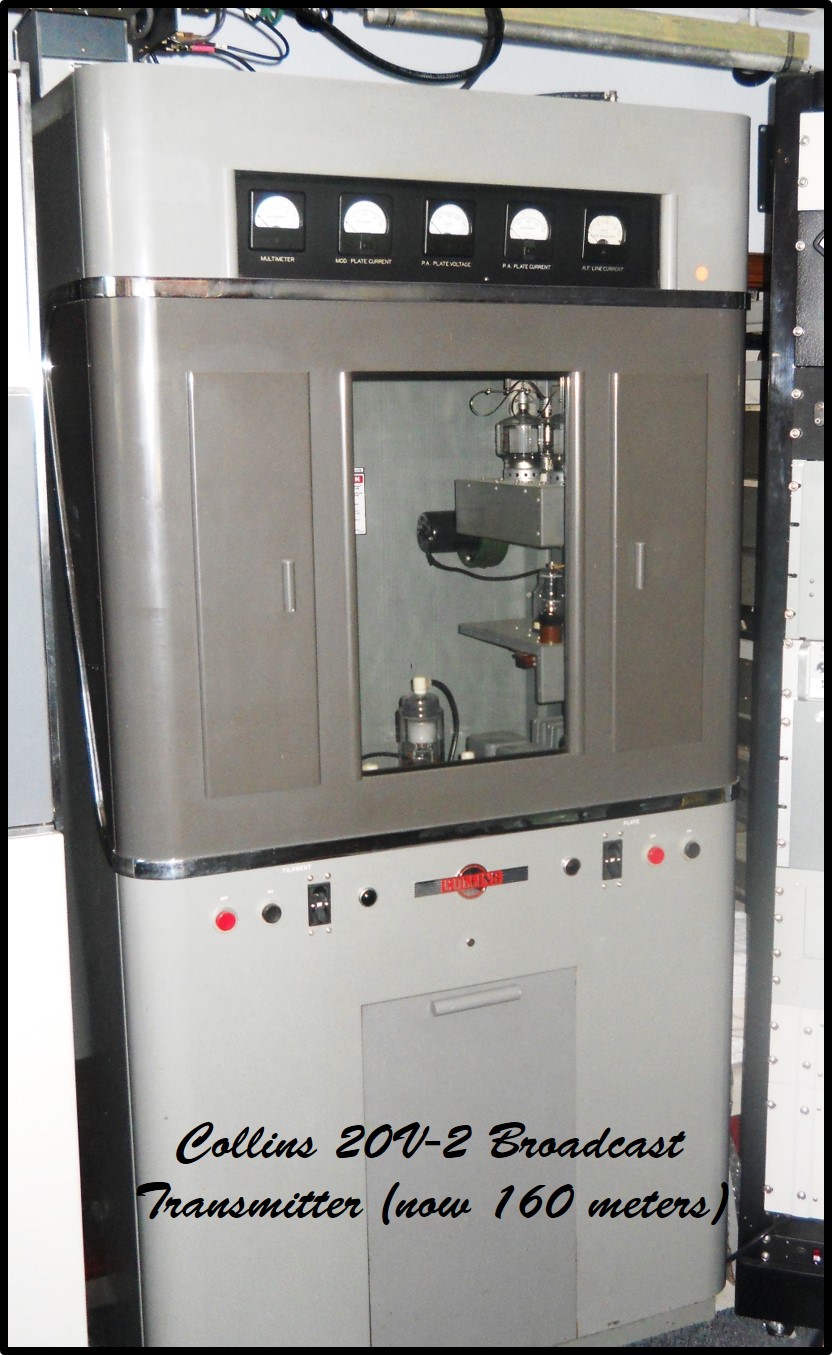
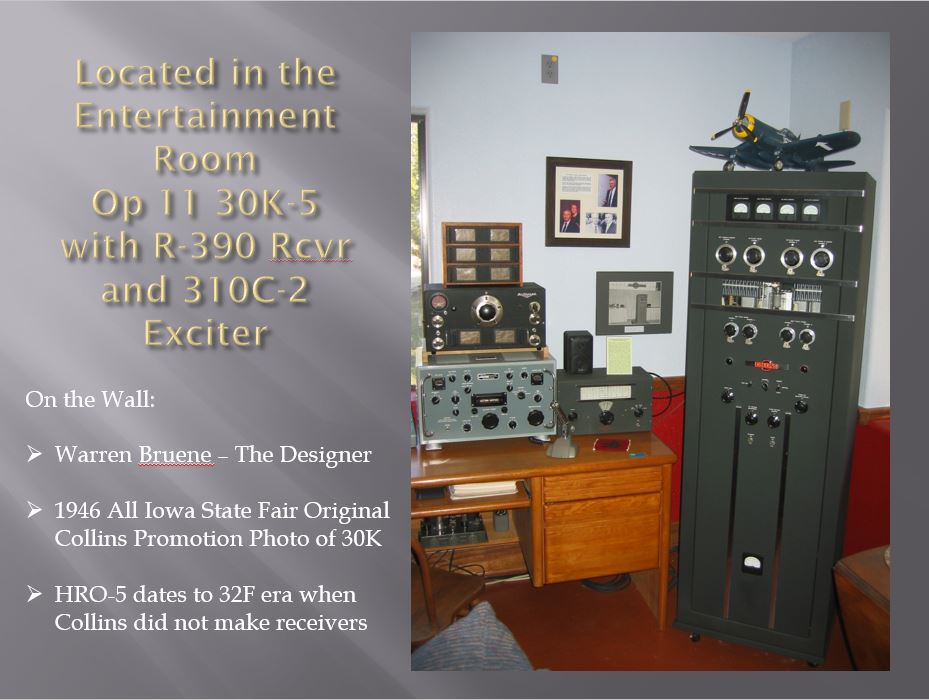
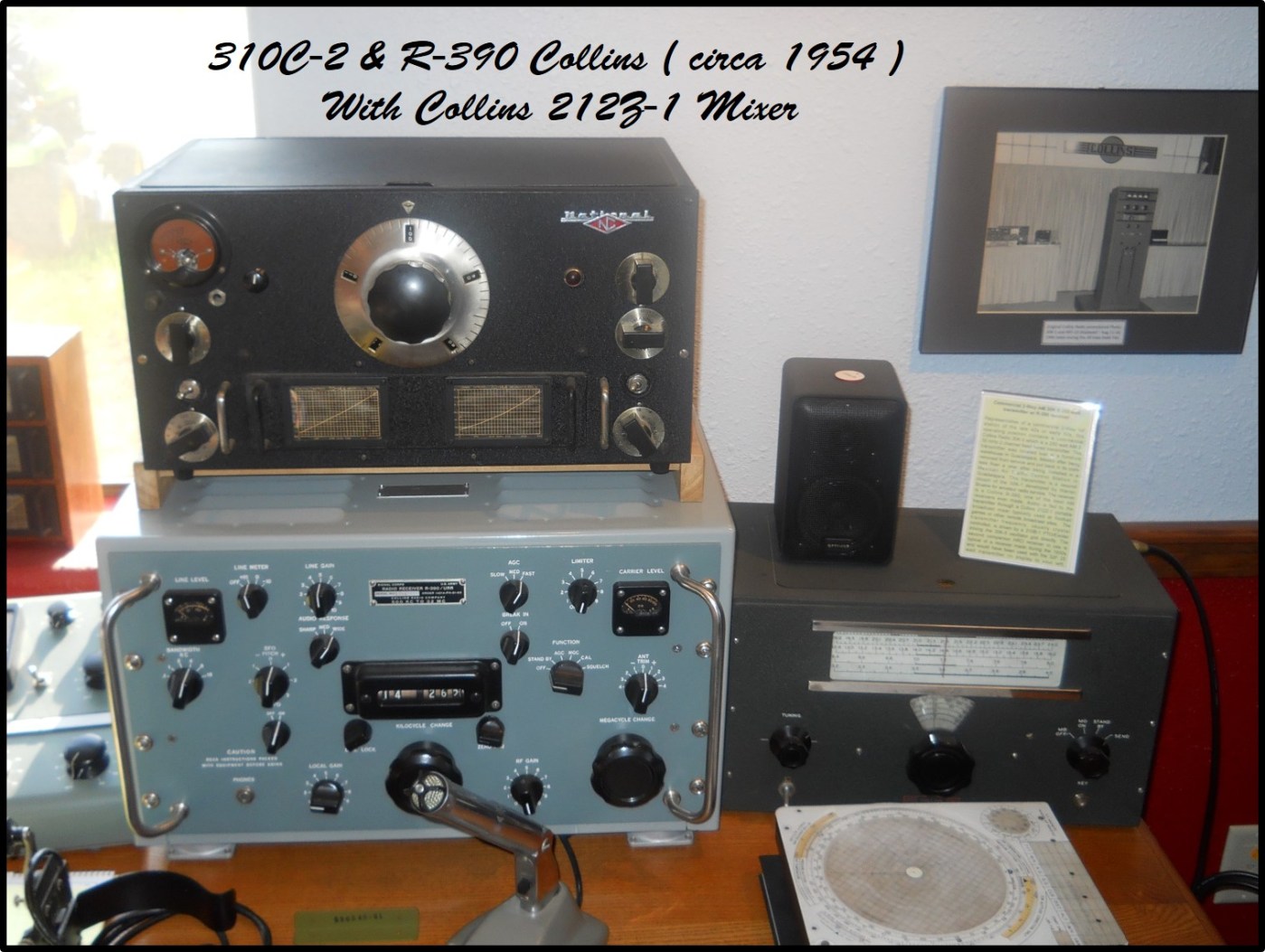
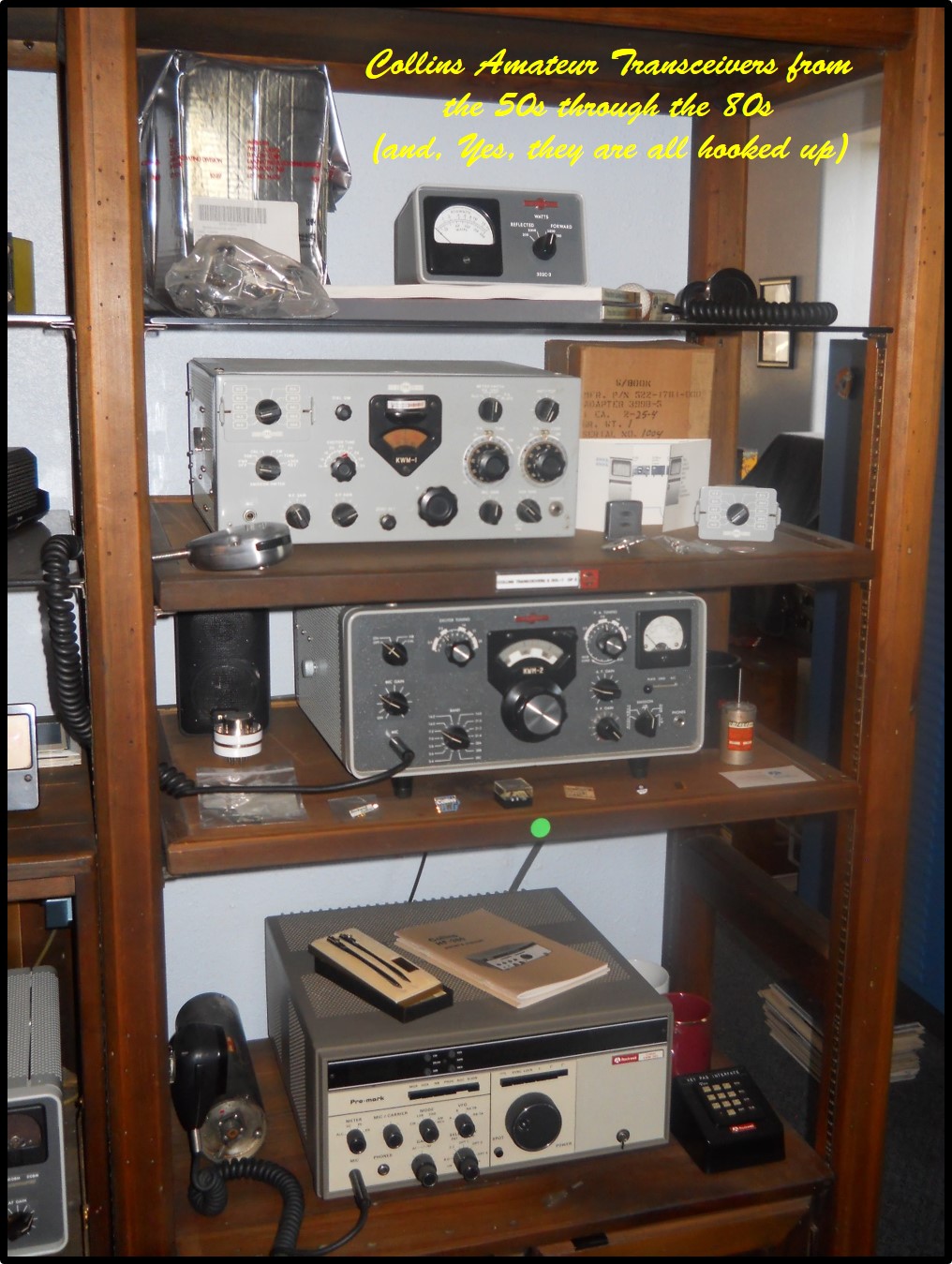
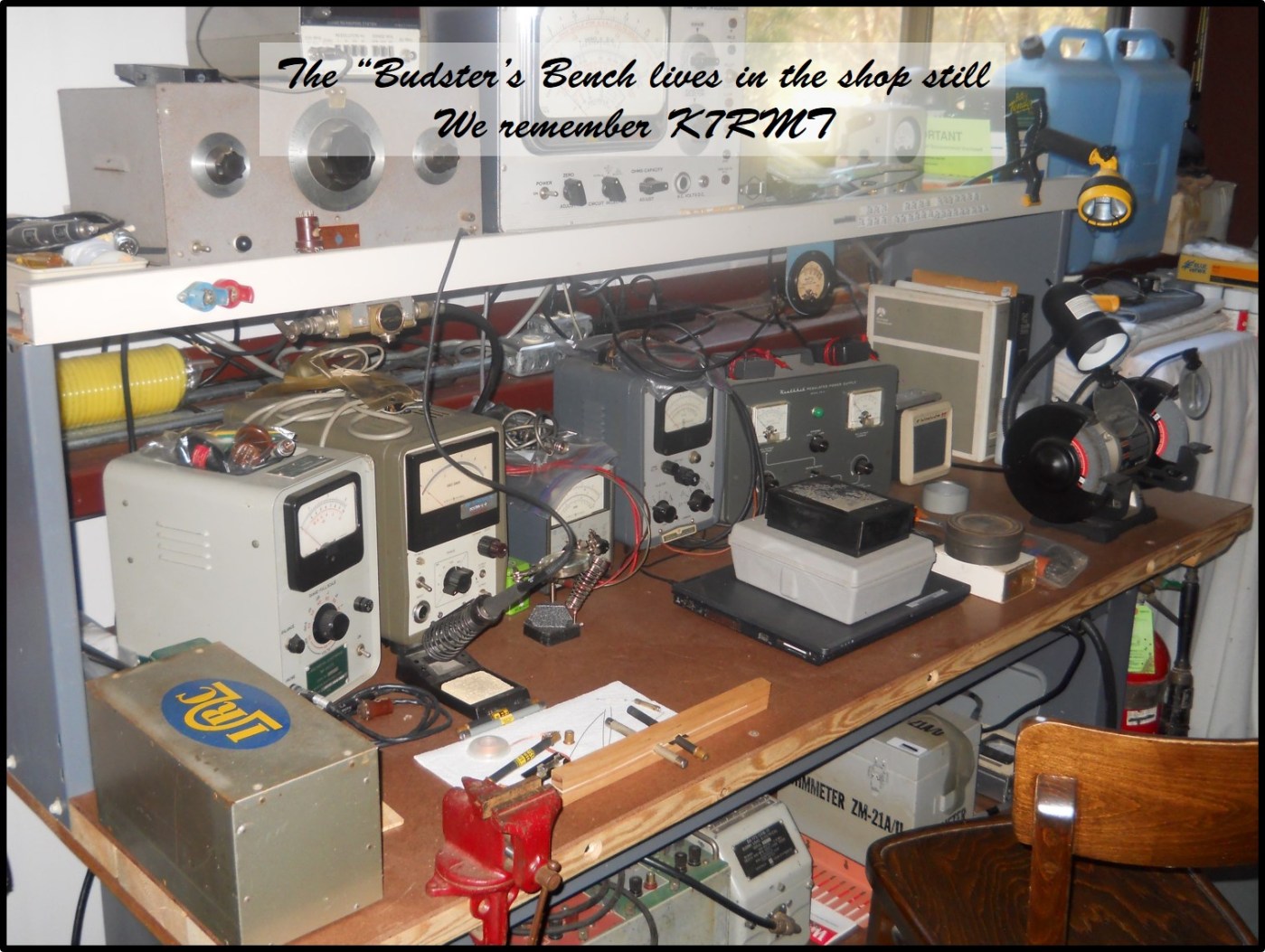
Photographs by Bill Carns, N7OTQ, from his Collins Collections page on the CCA’s virtual museum, where more than fifty photos of the collection can be seen.
The B-29 in the Air
One of the more remarkable contacts ever logged from KØCXX was with FIFI, the last B-29 Superfortress remaining on flight status in the United States. The aircraft was operating with a period-correct Collins HF station — an ART-13 transmitter, a BC-348R receiver, and a Collins 180S-1 antenna tuner feeding a fuselage-to-vertical-stabiliser wire antenna. Bill, on the ground, was running his Collins R-390 receiver, the 30K-5 transmitter, and the 212Z-1 audio mixer. The contact was, in its way, a perfect closed loop: Collins to Collins, on amateur frequencies, from a flying piece of Second World War history to a station whose call honours Art Collins himself.
Thirty-Six Years and Counting
Bill served first as Vice President of the CCA (elected in 2009 after Mac McCullough stepped down), then as President from 2010 to 2014, re-elected unanimously to a second term in January 2013, before handing the office to Scott Kerr, KE1RR. He edited The Signal through those years and beyond, until about 2017, when Scott Kerr also took over the editor’s chair. He was also a founder of the Collins Radio Heritage Group, an alliance of the CCA and the Antique Wireless Association (AWA) formed to preserve Collins history. He has hosted CCA banquets at Dayton, Plano, the AWA convention at Bloomfield, and the 2009 Caribbean Cruise. He has approved articles, ordered photography, written editor’s columns, balanced the dues structure, and shepherded the organisation through dues increases, board transitions, and the changing generational membership that the Collins community now faces. He has done all of it, by every personal account, with the same patient courtesy that the founding trio set as the organisation’s operating ethic in 1991.
CCA Years of Service
For the best part of a decade, almost nothing the CCA produced in print — the magazine, the technical archive, the production surveys, the equipment monographs — reached the membership without first passing across Bill’s desk. Across thirty-six years of involvement, that body of work is no small thing. It is the single largest reason the CCA exists in the form it does, in 2026, as a going organisation rather than a fond memory of the 1990s Sunday net.