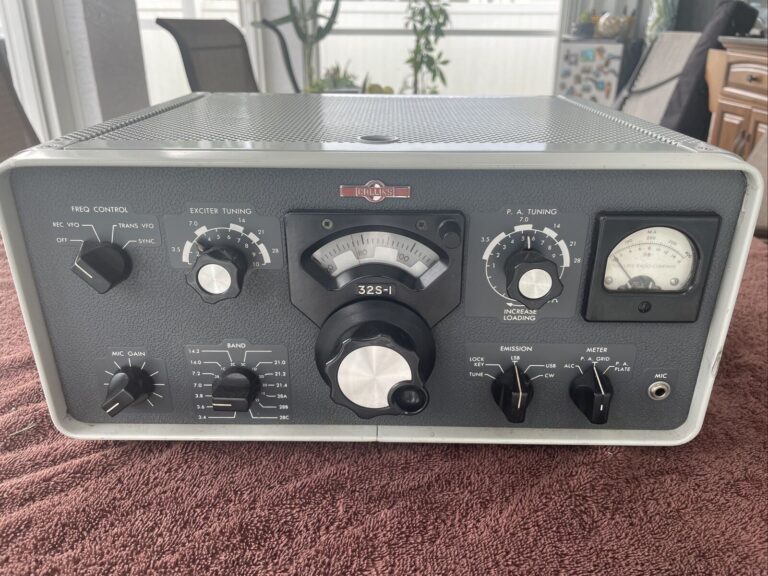





This Collins 75A-4 amateur receiver is a clean, largely original example with plenty of period appeal. It comes from a single owner who evidently stored and operated it with care, and it was used alongside a Collins KWS-1, the 75A-4’s companion transmitter, in an active station built around Collins equipment.
Chassis and interior
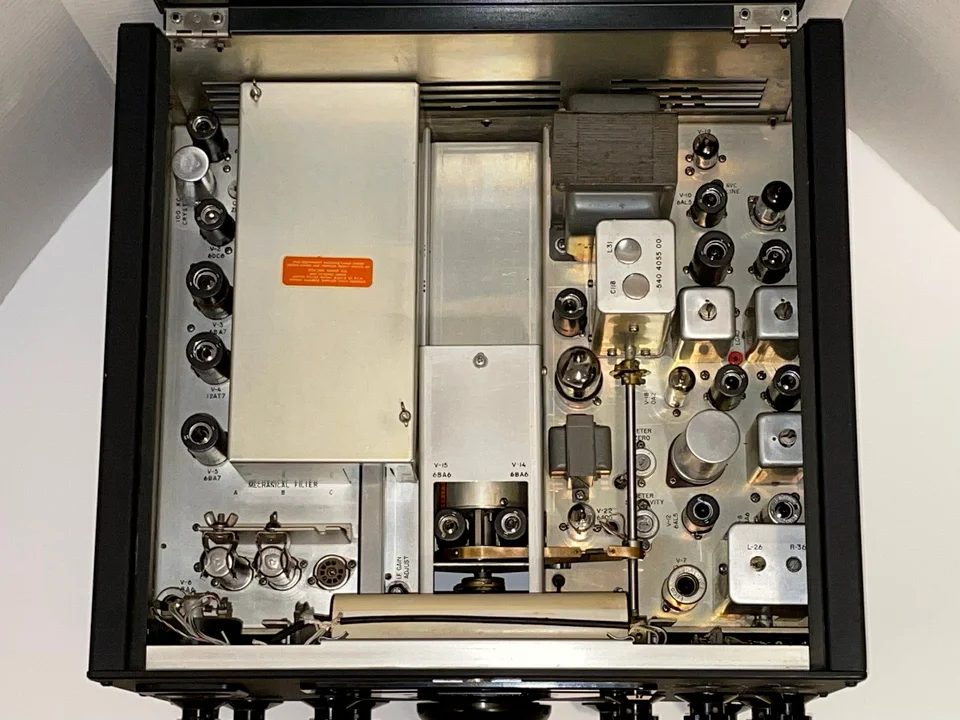
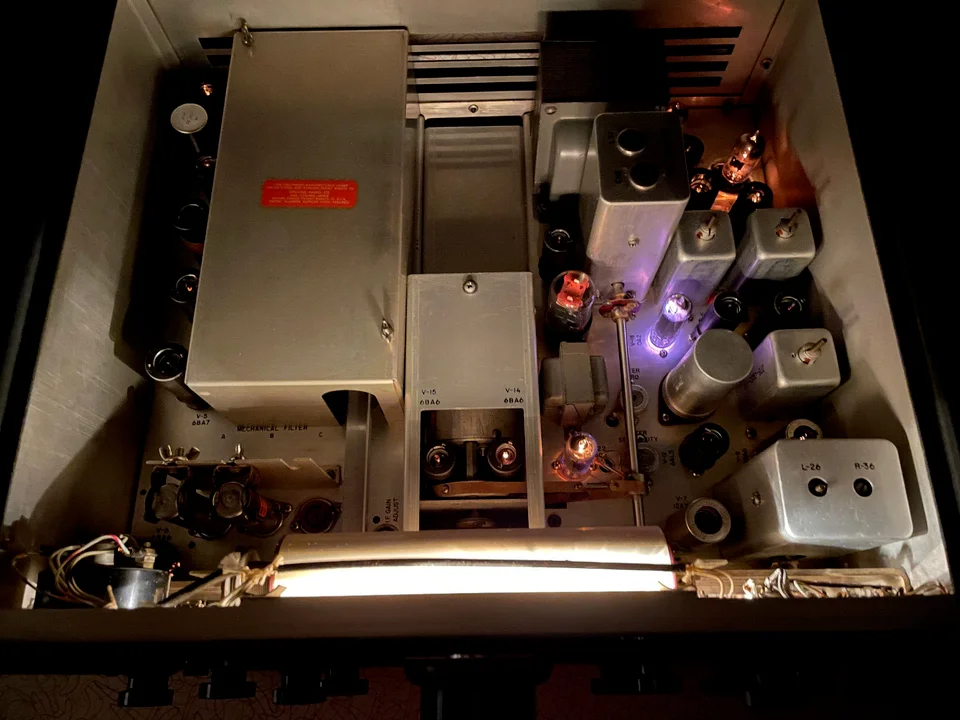
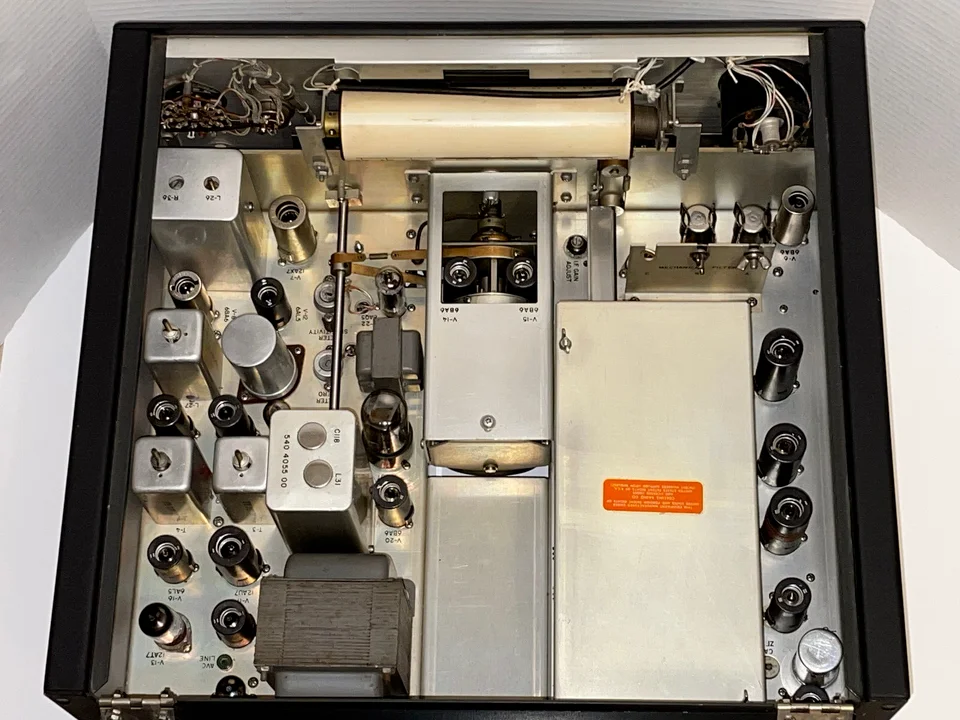
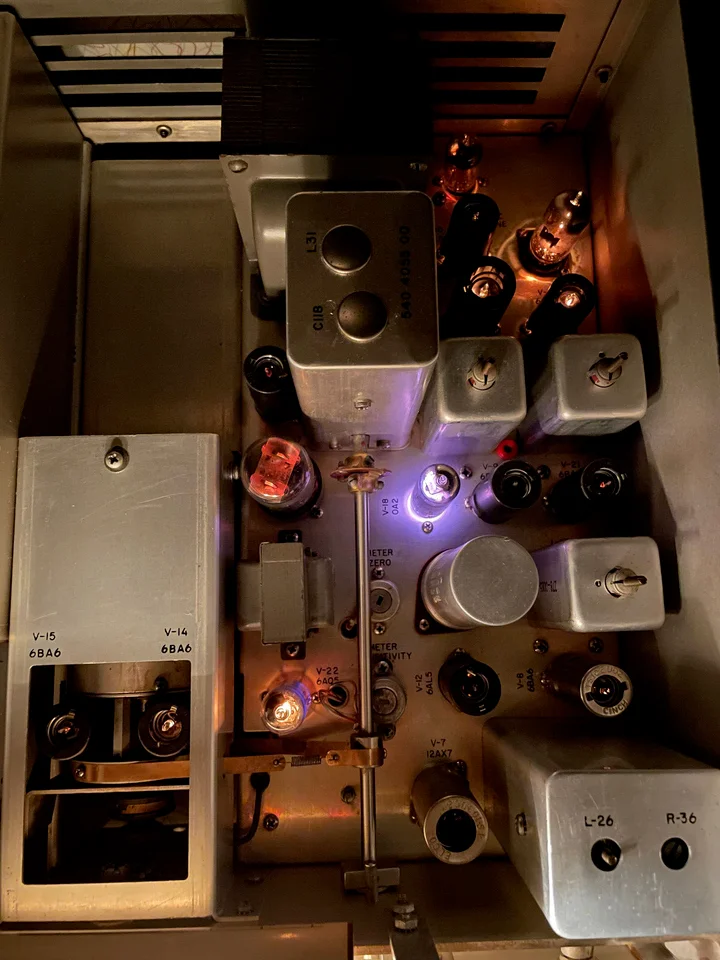
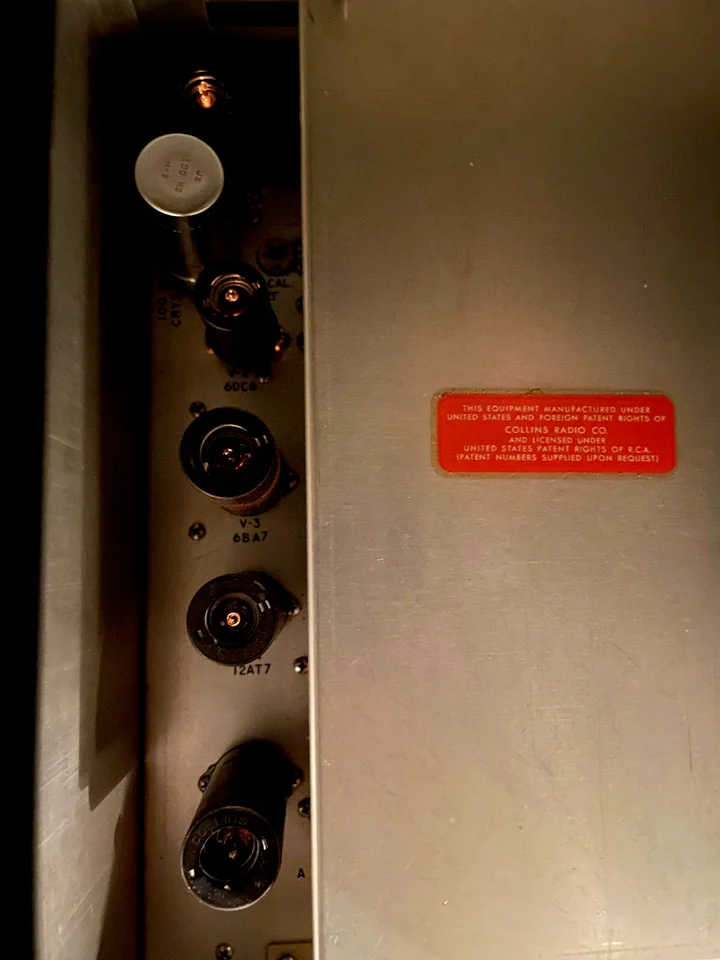
The receiver retains its original chassis, and the factory markings on it are still legible. The internal parts, including the transformers and tube sockets, appear to be original, and both the top and bottom of the chassis are very clean. There are no loose particles inside or out, no non-original drilled holes and no major dents.
Front panel
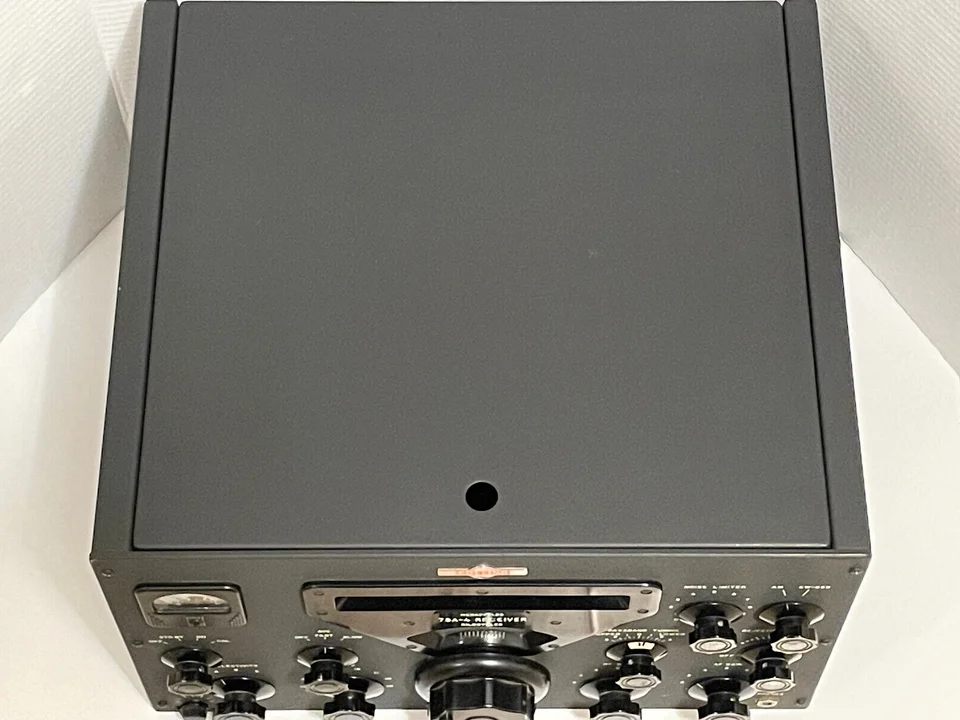
The front panel keeps its original factory paint, lettering and knobs, and all of its original parts are intact and working. The meter and both dials are original and free of cracks; each dial turns smoothly in both directions and the DIAL LOCK works as it should. The Collins winged emblem is intact and secure, the knobs are a matching set that switch correctly, and the original PHONES jack is still fitted.
Rear panel, cabinet and covers
The rear of the set is in excellent condition, with its original factory paint and legible markings, all of its original connections and fittings, and its factory-stamped serial number. The original line cord and plug are still fitted, with a small patch of electrical tape on the cord. The cabinet venting is intact and undented.
The original owner repainted the top cover, neatly, and appears to have touched up the sides as well. The top cover opens and closes properly, and its inside is clean apart from light wear consistent with its age. The bottom cover is missing: the owner could not recall what became of it after some electronic updates were made over the years.
Testing
Testing was brief. With a simple loop antenna connected, the receiver powered up with the front panel and tubes lit, and some Morse code was heard. The BAND switch operated correctly and the set tuned in both AM and CW-SSB, the STD BY and ON modes behaved as expected on the meter, and the AF GAIN and RF GAIN controls appeared to work, with the meter responding. All tubes are present but have not been tested individually, and no other testing has been done.
Filters and manuals
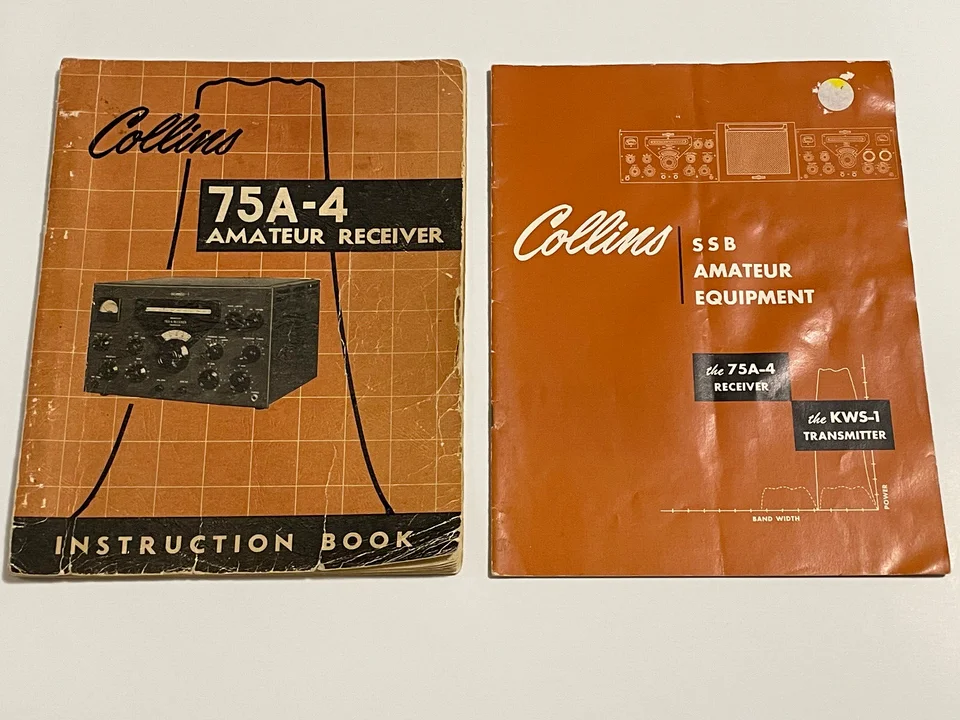
Two filters were found with the receiver, and a third may be fitted in the lower part of the chassis. Two original manuals came with it: one for the 75A-4 itself and one that probably belonged with its companion KWS-1 transmitter. Both are complete and in good overall condition, with some wear.
Although this 75A-4 is not new-old-stock or mint, it is a clean receiver inside and out, and it would make a fine addition to a period Collins station or collection, either left as it is or given a few minor finishing touches.
Frequently Asked Questions
What condition is the Collins 75A-4 receiver project unit in?
The Collins 75A-4 is a clean, largely original example rather than a NOS or mint one. It keeps its original chassis with legible factory markings, original transformers and tube sockets, original front panel paint, lettering and knobs, crack-free meter and dials, and its factory-stamped serial number and line cord. The original owner repainted the top cover and touched up the sides, and the bottom cover is missing.
How was the Collins 75A-4 receiver tested?
Testing of the Collins 75A-4 was brief: it was run with a quick loop antenna and some Morse code was heard. The BAND switch, AM and CW-SSB tuning, STD BY and ON modes, and the AF GAIN and RF GAIN controls appeared to work, with the meter moving and the tubes lighting at power-on. The tubes were not tested individually and no other testing was done.
What filters and manuals came with the Collins 75A-4 receiver project?
The Collins 75A-4 was found with two filters, and a third filter may be fitted inside the bottom area of the chassis. It also came with two complete original manuals showing some wear: one for the 75A-4 itself and one that probably belonged with the Collins KWS-1, the 75A-4’s companion transmitter, which it was paired with in a station built around Collins equipment.